

Responsible sourcing is a business priority. But is it working?
Written by Jean-Baptiste Collovray
SUMMARY: Responsible sourcing programmes need to measure outcomes, not just activity. Supplier assessments, audits and Codes of Conduct can show that due diligence processes are taking place, but not whether they are reducing harm or improving conditions for people and the environment. To demonstrate impact, responsible sourcing teams need to define the outcomes they want to achieve, measure progress against them and direct resources towards effective mitigation and remediation.
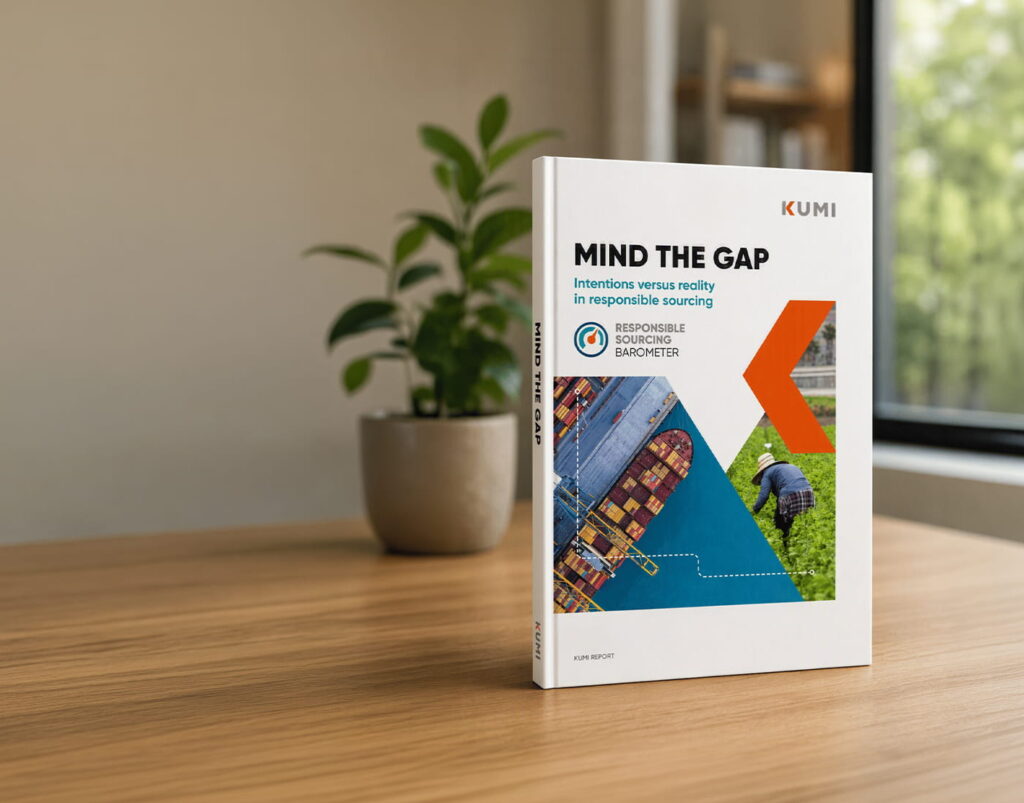
Only 14% of companies can point to clear improvements resulting from their responsible sourcing efforts. Of all the findings in Kumi’s Responsible Sourcing Barometer 2026, I believe this is the one that should concern responsible sourcing professionals the most.
Not because companies are doing too little, but because they may be focusing on low-impact activities or struggling to understand whether their efforts are making a difference.
One of the things that I have observed, even in just the past few years, is that responsible sourcing has successfully fought its way into executive committees and boardrooms. This has been confirmed in the Responsible Sourcing Barometer, with more than three-quarters of surveyed companies assigning accountability at senior executive level and nearly half now having board-level oversight. This increasing visibility is positive, but it creates a new challenge: leaders will rightly expect teams to demonstrate whether programmes are working, whether resources are being used properly and what results further investment will deliver.
This is therefore more than a measurement gap. It raises harder questions about how programmes are designed, where resources go and how long they can retain organisational support if they cannot show that they are making a difference.
More senior oversight means harder questions about results
I recognise this challenge because I have been through it myself. A few years ago, during my time in an in-house responsible sourcing role, I was guilty of measuring the success of programmes through the percentage of suppliers that had signed a Code of Conduct or the proportion of high-risk supplier facilities audited. Conversations with peers often focused on the same indicators: supplier coverage, completed audits and closed corrective actions. We were measuring progress through what we could most easily count, partly because we did not yet have enough hindsight to understand whether those efforts were actually leading to meaningful improvements.
For a while, those indicators (e.g. supplier coverage, numbers of completed audits, numbers of closed corrective actions) were accepted as evidence that programmes were moving in the right direction. But every part of a company eventually faces the same questions: what are we getting in return for our investments; are resources being used effectively; what will additional investment achieve? Responsible sourcing is not exempt from scrutiny, particularly now that it has the attention of senior executives and boards.
A point worth acknowledging is that most responsible sourcing professionals have spent years building programmes, securing resources and expanding their scope. Like any business function, there is pressure to demonstrate activity, maintain momentum and justify future investment in each budget cycle. As a result, internal conversations can easily become centred on programme coverage, audit activity and whether budgets are being fully utilised, rather than whether those efforts are actually producing meaningful results.
In some ways, we, in responsible sourcing teams, created this situation ourselves. We often presented coverage, audits and programme growth as evidence of success because they were easy to measure and helped demonstrate progress. Leadership teams accepted those metrics because they were the ones being reported. But as responsible sourcing gains visibility and accountability at senior levels, relying on these indicators as the primary measure of success will become increasingly difficult to sustain.
The reality is that senior leaders and boards are ultimately accountable for programmes that may not be working as effectively as they believe they are.
As the Responsible Sourcing Barometer puts it, “activity is running ahead of impact”. Boards now need the right indicators to understand whether programmes are effective, whether resources are being directed towards the right activities, and whether those activities are delivering the outcomes they were intended to achieve. And to get those indicators, they need to start asking the right questions.
Responsible sourcing has a measurement problem
The Responsible Sourcing Barometer suggests that many companies have fallen into the same trap I did a few years ago: measuring what is easiest to measure:
- How many suppliers were assessed?
- How many audits were completed?
- How many suppliers signed the Code of Conduct?
These metrics are useful, but they are process metrics showing that activity happened; they do not tell us whether anything has improved.
Here, the responsible sourcing programme records a success if all suppliers committed to the Code of Conduct and a percentage of high-risk suppliers have been audited. But what exactly improved for workers? What changed for affected communities? What environmental risk was reduced, and by how much?
Too often, nobody knows. This is the hard truth, and this is where the uncomfortable, but entirely legitimate, questions arise: Why do we need to audit all these suppliers? What impact have these audits delivered? We are asking for additional resources to follow up on assessment and audit findings, but are we getting sufficient value from those activities? And if compliance is the objective, is our approach actually making us compliant?
These questions quickly expose the limitations of the indicators we have relied on.
The comparison with quality management is useful here. A quality team would not demonstrate the effectiveness of its management system simply by reporting the number of inspections completed; it would look at whether defects are being prevented, identified and addressed, and whether resources are being used efficiently to achieve the intended result.
Responsible sourcing should be no different. The objective of a due diligence programme is not to complete audits, distribute questionnaires or increase supplier coverage. These are activities within a programme, but the real question is whether the programme is identifying the right risks, helping to address them and reducing harm in practice.
You cannot measure impact if most resources are spent on risk assessment
The lack of outcome measurement is not simply a problem with indicators. It also reflects how responsible sourcing programmes have allocated their time and resources.
Over the past decade, much of the effort has gone into identifying and describing risk: more supplier mapping, more assessments and dashboards, more sophisticated risk-scoring methodologies, and more visibility and coverage. These activities are necessary, but they do not themselves mitigate an impact or provide remediation.
This matters because outcomes can only be measured where action has taken place. If programmes concentrate predominantly on identifying risks, while less effort goes into supplier engagement, mitigation and remediation, it should not surprise us that companies have limited evidence of improvement.
This deserves a much deeper discussion than I can do justice to in a single article. In particular, it raises questions about how responsible sourcing programmes allocate resources, whether the pursuit of the perfect risk picture has come at the expense of mitigation and remediation, and how collaboration can be used to deliver greater impact. These are topics I intend to explore in a future insight.
For now, the key point is simpler: if outcomes can only be measured where action takes place, we should not be surprised that programmes focused primarily on risk identification struggle to demonstrate results.
Demonstrating impact is the next challenge
Responsible sourcing has largely won the argument that companies need due diligence programmes, but the next challenge is proving that they work.
I do not think anyone has all the answers: measuring change in complex supply chains is difficult, understanding whether improvements result from our actions is rarely straightforward, and meaningful outcomes take time. However, continuing to rely mainly on activity metrics because outcomes are harder to measure is no longer a credible response.
Many of us have gone through the same journey. We built programmes, expanded coverage and reported the indicators available to us. We also made mistakes, and there is no point denying the uncomfortable issue exposed by the Responsible Sourcing Barometer: we know a great deal about what responsible sourcing programmes do, but far too little about what they achieve.
The companies that succeed will be those that can demonstrate that their actions are changing outcomes for people and the environment, and that resources are directed where they can make the greatest difference, even if this means missing some risks along the way.
That should not lead to another layer of reporting or another search for a perfect methodology. It should lead to a practical conversation: what outcomes are we trying to achieve, what evidence would show that we are making progress, and what should we change when our current approach is not working?
Because ultimately, the question is no longer whether companies are doing responsible sourcing. It is whether it is working.

