

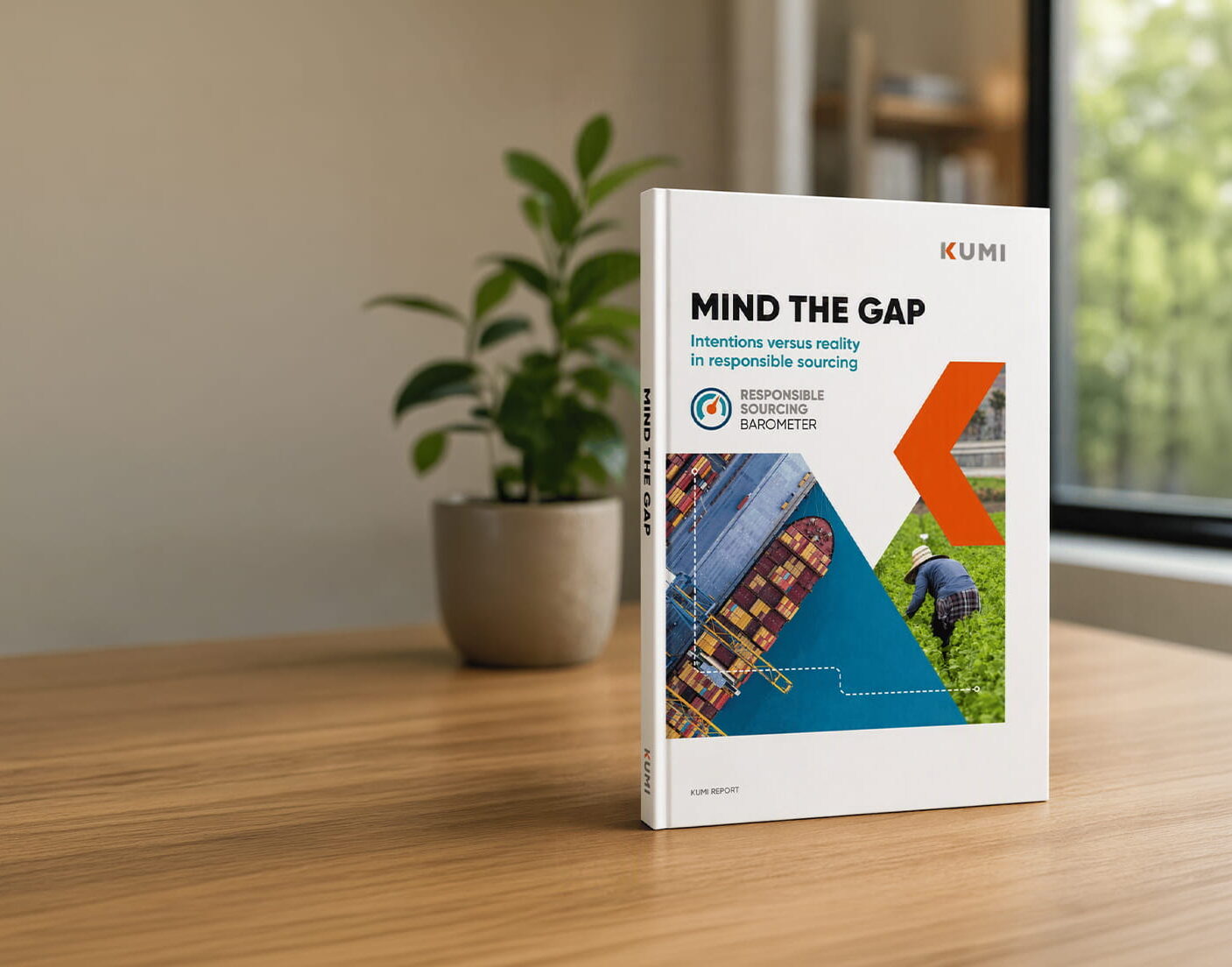
What is the Responsible Sourcing Barometer?
The Responsible Sourcing Barometer is a confidential, cross-industry benchmarking survey of responsible sourcing practices. The research captures the experiences, priorities and challenges of companies managing supply chain due diligence across a wide range of sectors and geographies. Unlike many studies that rely on public reporting, the Barometer draws on confidential insights from companies about what they are actually doing in practice.
The findings provide valuable insights for boards, sustainability leaders, procurement teams, compliance professionals and investors seeking to understand the current state of responsible sourcing.

Key findings at a glance
- Only 1 in 7 companies can demonstrate clear improvements
Despite substantial investment in policies, audits, assessments and governance structures, only 14% of companies can point to clear improvements resulting from their responsible sourcing activities.
- Many companies are not measuring whether their programmes work
While responsible sourcing is increasingly receiving board-level attention, 25% of companies do not measure programme impact at all, raising important questions about whether organisations can demonstrate effectiveness when challenged by customers, regulators or investors.
- Risks are recognised, but due diligence often stops too early
Nearly one quarter of companies (24%) have only mapped direct suppliers or have not mapped their supply chains at all. Perhaps more concerning, 18 of the 50 companies identifying forced or child labour as a significant risk conduct no due diligence beyond Tier 1 suppliers. This creates potential blind spots in areas where the most severe risks are often found.

Who took part?
The 2026 Responsible Sourcing Barometer draws on confidential responses from 110 medium to large enterprises, including many global multinational organisations. Participants represent the companies most exposed to increasing expectations around supply chain due diligence, responsible sourcing and regulatory compliance.
Respondent profile:
- 110 participating companies
- 7 in 10 employ more than 1,000 people
- 6 in 10 sell finished products directly to end customers
- Respondents span multiple sectors and positions across global value chains, with a strong representation of companies facing significant due diligence obligations.

Download the report
Complete the form to receive your free copy of the Kumi Responsible Sourcing Barometer 2026.
Whether you are responsible for sustainability, procurement, compliance, legal risk or supply chain management, the findings provide valuable benchmarks and practical insights for strengthening your organisation’s approach to responsible sourcing.
Have questions about the findings?
Our team works with organisations around the world to strengthen due diligence programmes, improve visibility into supply chain risks, build supplier capability and develop evidence-based approaches to measuring impact.
Download the report and get in touch to discuss what the findings mean for your organisation.


