
CASE STUDIES
On-the-ground due diligence for a high-risk sourcing decision in DRC
The context
This would be the first time the client sourced material from a third party in the DRC and management required enhanced assurance before any commitment was made.
An initial desk-based risk assessment had identified several potentially severe risks and impacts. However, the information available was insufficient to assess their significance accurately or make a well-informed sourcing decision. Further investigation on the ground was needed.

What we uncovered
The combination of prior preparation and adaptive on-site investigation revealed several significant issues:
- Illegal presence of public security forces on site, operating without a clear legal mandate
- Potential collusion between security forces, foreign traders, semi-mechanised illegal mining operators, and ASM communities
- On-the-ground evidence of recent activities directly contradicting statements made by site management in the supplier questionnaire that had been sent to our client
- Lack of effective controls to prevent mixing of mechanised mine production with third-party material originating from ASM sources
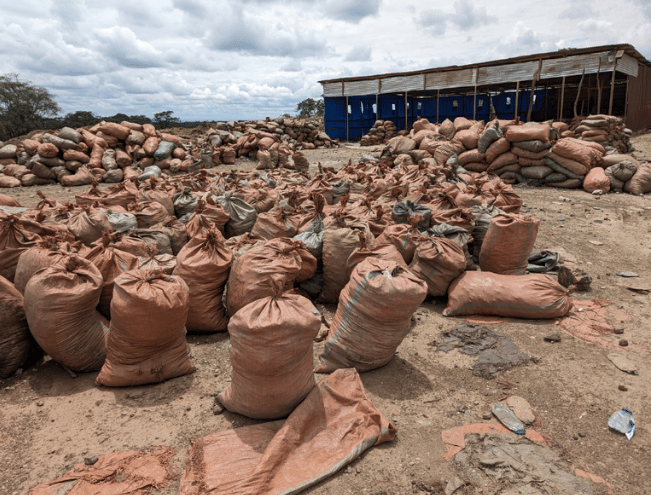
- ASM activity significantly beyond what had been reported, including the presence of comptoirs[1] and depots within the mining area, and evidence of external actors operating in pits that had been reported to be closed or inactive
[1] A comptoir is a licensed buying station or trading house where raw, unrefined minerals are purchased from local miners and middlemen before entering global supply chains.

The difference it made
The assessment gave the client a clear, evidence-based picture of actual site conditions, including risks that were significantly more complex than the desk-based review had indicated. This enabled the client to:
- Make an informed, evidence-based sourcing decision with a grounded understanding of which risks could be addressed and which could not be realistically mitigated or remediated, based on our practical recommendations.
- Define the conditions for responsible sourcing by clarifying what would need to be in place before sourcing from the site could be considered, in line with legal requirements, international standards such as the OECD Minerals Guidance, and the client’s own Code of Conduct.
Beyond the immediate decision, our work highlighted the complexity of third-party sourcing in high-risk contexts and informed the need for a structured internal approach to evaluating such decisions. Our report and presentation to senior management substantially strengthened senior management’s understanding of responsible sourcing risks in this context. It also enabled the client to demonstrate alignment with expectations under applicable due diligence frameworks, particularly in relation to identifying, assessing, and responding to adverse impacts.
